Imagine the unseen backbone of our modern world – the precise electrical pulses that power everything from your smartphone’s Wi-Fi to life-saving medical imaging. Behind these critical signals often stand various Types of Hz Generators: Signal, Function, Power, and RF generators, each a specialist in creating specific frequencies for specific tasks. For anyone navigating the complex world of electronics, understanding these devices isn't just helpful; it's essential for everything from troubleshooting a circuit to pioneering the next generation of wireless technology.
You might be a seasoned engineer, a curious student, or someone simply trying to grasp the tools that build our connected reality. Regardless, this guide is designed to cut through the jargon, delivering clear, actionable insights into these fundamental instruments. We'll demystify their roles, explore their nuances, and empower you to choose the right generator for your needs, ensuring your projects are built on a foundation of precision and reliability.
At a Glance: Understanding Hz Generators
- What They Do: Hz generators create electrical signals at specific frequencies (Hz), amplitudes, and waveforms.
- Core Types: Primarily categorized into Signal, Function, Power, and RF generators, each with unique capabilities.
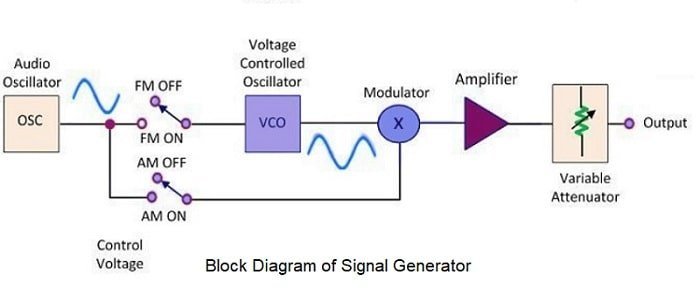
- Key Components: Most include an oscillator for waveform generation, a modulator for signal shaping, and a frequency control circuit for precision.
- Why They Matter: Essential for testing, calibration, R&D, and manufacturing across diverse industries like telecom, aerospace, medical, and education.
- Choosing Wisely: Factors like frequency range, output power, modulation needs, and form factor are crucial for selection.
The Heartbeat of Electronics: What Hz Generators Are and Why They Matter
At their core, Hz generators, often broadly referred to as signal generators, are electronic devices that produce repeating or non-repeating electronic signals (waveforms) with specific characteristics. Think of them as the metronomes of the electronic world, providing the rhythmic pulses and complex symphonies needed to bring circuits to life, test their limits, and ensure they perform as intended.
These generators aren't just for showing off; they're indispensable tools for a vast array of applications. From calibrating sensitive radio receivers to simulating environmental interference for robust military equipment, the ability to create precise, controlled signals is paramount. Without them, developing, manufacturing, and maintaining virtually any electronic device would be a shot in the dark. If you want to dive deeper into the broader world of these essential instruments, consider it your guide to Hz generators.
Anatomy of a Signal Generator: The Core Components
While different Hz generators specialize in distinct tasks, most share a common architectural backbone. Understanding these fundamental building blocks helps you appreciate the sophistication behind even the simplest signal.
- The Oscillator: The Signal's Genesis
Every signal starts somewhere, and that's the oscillator's job. This component is responsible for generating the raw, fundamental waveforms – typically sine, square, or triangle waves. A good oscillator provides a stable output across its frequency range, often employing automatic amplitude control to maintain consistency. It's the engine that kicks off the entire process. - The Modulator: Shaping the Message
Raw waveforms are useful, but real-world signals rarely stay pristine. This is where the modulator comes in. It applies various techniques like Amplitude Modulation (AM), Frequency Modulation (FM), or Phase Modulation (PM) to the carrier signal. Imagine a pristine radio wave (the carrier) being "shaped" by your voice (the modulation) so it can carry information. Internal modulators offer standard test conditions, while external modulators allow for more complex, customized signal shaping, critical for simulating intricate communication scenarios. - The Frequency Control Circuit: Precision and Stability
Generating a signal is one thing; generating it with absolute precision and maintaining that precision over time is another. The frequency control circuit is the meticulous guardian of accuracy. It allows for precise adjustment of the output frequency, often supporting multiple frequency bands and ranges. This component ensures the signal remains stable, preventing "drift" that could skew test results or compromise system performance.
Deciphering the Hz Generator Landscape: Signal, Function, Power, and RF
While the umbrella term "Hz generator" encompasses many devices, we can broadly categorize them by their primary function and the types of signals they excel at producing. This helps us understand their specific applications and limitations.
1. RF Signal Generators: The Masters of Wireless Communication
When you hear "RF generator," think high-frequency waves – the kind that enable everything from Wi-Fi and Bluetooth to satellite communication and radar. An RF signal generator is an electronic device specifically designed to create electrical signals with extremely accurate frequency, amplitude, and waveform attributes within the radio frequency spectrum. Their primary purpose is to test, measure, diagnose, and calibrate radio frequency circuits and systems.
Why RF Generators are Critical:
Consider designing a new smartphone. You need to test its Wi-Fi antenna, cellular modem, and Bluetooth chip. An RF signal generator provides the precise, controlled signals required to evaluate how these components perform, how much power they consume, and if they meet regulatory standards. They are indispensable for:
- Testing and Calibration: Verifying the performance of amplifiers, filters, receivers, and entire communication systems.
- Research & Development: Studying RF signal behavior, developing new modulation schemes, and pushing the boundaries of wireless technology.
- Manufacturing: Ensuring every device rolling off the assembly line meets stringent quality and performance criteria.
- Maintenance & Diagnosis: Troubleshooting issues in existing RF systems, from broadcast towers to individual radios.
Types of RF Signal Generators: A Closer Look
The world of RF generators isn't monolithic; it has evolved to meet increasingly complex demands. - Analog RF Signal Generators: The Foundation
These are the veterans of the RF world. Older, simpler, and generally more affordable, analog generators produce continuous waveforms, primarily sine waves, typically ranging from a few MHz up to several GHz. They generate signals using a fundamental oscillator and can apply basic modulations like AM and FM. - Best For: Basic testing and calibration of older communication systems, radio transmitters/receivers, general lab work, and educational settings where budget is a primary concern.
- Limitations: They lack the precision and flexibility for complex digital modulations and can experience frequency drift over time, requiring more frequent calibration.
- Vector RF Signal Generators (Digital): The Modern Powerhouses
Welcome to the cutting edge. Vector RF signal generators are digital marvels that produce highly complex, modulated signals by independently controlling the amplitude and phase of two orthogonal components (I/Q, or In-phase and Quadrature). This allows them to generate sophisticated modulation schemes like QAM (Quadrature Amplitude Modulation), QPSK (Quadrature Phase-Shift Keying), and OFDM (Orthogonal Frequency-Division Multiplexing) – the very heart of modern wireless standards like LTE, Wi-Fi 6/7, and 5G. - Best For: Testing contemporary wireless communication devices, radar systems, satellite communication, and any application requiring high precision, stability, and the ability to generate arbitrary or complex modulated waveforms. They often integrate advanced features like Digital Signal Processing (DSP) and real-time modulation analysis.
- Advantages: Exceptional precision, stability, and flexibility, including the ability to generate arbitrary waveforms, inject noise, and create multi-tone signals for comprehensive stress testing.
2. Function Generators: The Workhorses of General Electronics
While RF generators focus on high frequencies and complex modulations, function generators are the versatile, general-purpose tools for a broader range of electronic work. They create multiple standard waveforms – primarily sine, square, and triangle waves – typically in the audio to low-RF range (up to tens of MHz).
- Best For: General circuit testing, educational labs, audio applications (testing amplifiers, speakers), and basic signal injection for troubleshooting. They are indispensable for hobbyists and educators.
- Key Characteristics: Often simpler to operate, more affordable than RF generators, and provide a good balance of waveform variety and frequency range for non-specialized tasks.
- Limitations: Limited RF application; they don't offer the frequency range, power, or complex modulation capabilities required for advanced RF testing.
3. Pulse Generators: The Digital Heartbeat
Pulse generators are specialists designed to produce precise square waves (or pulses) with incredibly fast rise and fall times, adjustable widths, and controlled frequencies. Think of them as creators of digital "on" and "off" signals.
- Best For: Testing digital circuits (logic gates, microcontrollers), evaluating high-speed data transmission lines, power electronics (driving MOSFETs/IGBTs), and radar systems (generating trigger pulses).
- Key Characteristics: Emphasize pulse integrity, clean edges, and accurate timing parameters. They are crucial for verifying signal integrity in digital systems.
4. Sweep Generators: Charting Frequency Response
A sweep generator is a particular type of signal generator that produces a signal whose frequency continuously varies across a predefined range. Instead of a fixed frequency, it "sweeps" through a spectrum.
- Best For: Testing the frequency response of filters, amplifiers, and other frequency-dependent circuits. By observing the output as the frequency sweeps, engineers can quickly visualize how a component behaves across its operating range.
- Application Example: You can use a sweep generator to test a band-pass filter, observing which frequencies pass through and which are attenuated, effectively drawing the filter's characteristic curve on an oscilloscope.
5. Arbitrary Waveform Generators (AWG): The Ultimate Customizers
If you need a signal that doesn't conform to standard shapes, an Arbitrary Waveform Generator (AWG) is your go-to device. AWGs allow users to define and generate virtually any custom waveform using mathematical equations, imported data points, or software-based drawing tools. They feature high sampling rates and deep memory to store and reproduce these complex signals accurately.
- Best For: Advanced testing in cutting-edge communication standards (e.g., LTE, 5G signal emulation), simulating real-world imperfections (noise, interference), radar, electronic warfare, and sophisticated research and development projects where unique or evolving signal types are required.
- Comparison: While vector RF generators can create complex modulated signals, AWGs take it a step further by allowing complete freedom in waveform design, making them invaluable for simulating highly specific or non-standard scenarios.
Other Specialized Signal Generators
Beyond the main categories, several other types serve niche but critical roles:
- Video Signal Generators: Produce specific video signals (with necessary synchronization signals) for testing display units, such as older television units, monitors, and video processing equipment.
- Audio Signal Generators: Designed to produce signals within the audible frequency range (typically 20 Hz to 20 kHz). They are used for testing audio systems, measuring distortion, analyzing frequency response of speakers and microphones, and calibrating sound equipment.
Unpacking the Power: Key Features to Look For
Choosing the right Hz generator means understanding its specifications. These features define a generator's capabilities and suitability for different applications.
- Frequency Range: This is arguably the most critical feature. It specifies the minimum and maximum frequencies (in Hz, kHz, MHz, or GHz) the generator can produce. A wider range indicates greater versatility, but specialist RF generators will cover specific, higher bands.
- Amplitude Range / Output Power: Amplitude refers to the peak strength of the signal, while output power measures the power level supplied by the generator (often in dBm or Watts). Precision in amplitude control and sufficient power are vital for many tests, especially when driving specific loads or simulating signal strength.
- Modulation Capabilities: The ability to modify a carrier signal to encode data. This includes basic analog modulations (AM, FM, PM) for simpler signal generators, and complex digital modulation schemes (QAM, QPSK, OFDM) for advanced vector RF generators. Your application's communication standard will dictate the required modulation types.
- Waveform Format: The shape of the signal. Common types are sine, square, and triangle waves. Arbitrary waveform generators expand this to include custom, user-defined shapes.
- Sweep and Burst Functions:
- Sweep Function: Generates a signal that continuously varies its frequency over a set range and time interval, ideal for frequency response analysis.
- Burst Function: Generates a set number of signal cycles, then pauses, repeating this pattern. Useful for pulsed radar applications or testing transient responses.
- Triggering Options: Allows the generator to synchronize its output with external events or initiate a signal based on an external trigger. This is crucial for integrating the generator into automated test systems or synchronizing with other instruments like oscilloscopes.
- Waveform Memory: For AWGs and complex signal generators, this refers to the internal memory used to store and recall waveform patterns. Larger memory allows for longer and more intricate custom waveforms.
The Physical Form: How Generators Show Up
Hz generators come in various physical formats, each suited for different environments and needs.
- Benchtop Generators: These are the traditional, standalone instruments you'd typically find in laboratories, R&D facilities, and industrial settings. They offer high precision, extensive features, and often multiple channels. Their size and power requirements usually mean they stay put.
- USB-Based Generators: Compact and portable, these devices connect to and are controlled by a PC via a USB interface. They leverage the computer's processing power and display, making them cost-effective and ideal for fieldwork, educational labs, or hobbyists where space is limited.
- Handheld Generators: Designed for ultimate portability, these battery-powered units are perfect for on-site testing, troubleshooting in the field, or quick checks where bringing a larger setup isn't practical. They prioritize compactness and ease of use, though often with fewer features than benchtop models.
- Modular/PXI Generators: These are cards or modules designed to be inserted into a larger chassis (like a PXI system), often controlled by a central computer. They are crucial for automated test systems, providing scalability, synchronized multi-instrument testing, and high throughput in manufacturing and validation environments.
- Software-Defined Generators: Leveraging digital signal processing (DSP) and Software-Defined Radios (SDRs), these are highly flexible and programmable solutions. They shift much of the signal generation and processing into software, allowing for rapid adaptation to new standards and complex signal scenarios without hardware changes.
Your choice of format will depend heavily on your specific application requirements, the need for portability, device compatibility with existing setups, and, of course, your budget.
Beyond the Lab: Diverse Applications of Hz Generators
The impact of Hz generators extends far beyond engineering benches. They are silent enablers in a multitude of industries, driving innovation and ensuring reliability.
- Telecommunications: The Backbone of Connectivity
From designing 5G base stations to testing the next generation of mobile phones, RF signal generators are indispensable. They simulate real-world signals, evaluate antenna performance, test modulators and demodulators, and help engineers study RF signal behavior in R&D labs. They are the tools that ensure your calls are clear, and your data speeds are lightning-fast. - Electronics Device Manufacturing: Quality Control at Scale
Every electronic product, from a simple remote control to a complex medical device, needs rigorous testing before it leaves the factory. Hz generators are essential for automated test systems, verifying that products comply with industry standards, function correctly, and meet performance specifications, leading to fewer defects and higher customer satisfaction. - Medicine and Healthcare: Imaging the Human Body
In the medical field, precision is paramount. Magnetic Resonance Imaging (MRI) machines, for instance, rely on incredibly precise RF signals to create detailed images of the body's internal structures. RF signal generators are crucial in the development and maintenance of these life-saving diagnostic tools. - Testing and Calibration: The Gold Standard of Performance
This is perhaps the most fundamental application. Generators create signals with known, precise characteristics to verify the performance of other electronic equipment. Think of it as a tuning fork for electronics. This is critical for meeting strict performance standards in industries like aerospace and defense and for simulating real-world conditions (e.g., noise, interference) to assess equipment robustness. - Communication Systems: Building Reliable Networks
Beyond telecommunications, Hz generators are vital for designing and testing all forms of communication networks – from military radio systems to satellite links. They help engineers measure system performance at various frequencies and power levels, detect distortion, analyze noise, and research how systems behave under challenging conditions. - Electromagnetic Compatibility (EMC): Ensuring Peaceful Coexistence
In a world teeming with electronic devices, ensuring they don't interfere with each other is crucial. EMC testing uses Hz generators to create different types of signals that simulate real-world interference scenarios. This helps engineers design products that are both resistant to external noise and don't emit excessive interference themselves. - Aerospace and Defense: Unwavering Reliability in Extreme Conditions
For critical systems like radar, communication, and electronic warfare, reliability is non-negotiable. RF signal generators are used to replicate jamming, interference, and other disruptive signals to ensure that these systems can withstand the most challenging real-world conditions, providing security and operational integrity. - Education: Training the Next Generation
In universities and technical schools, Hz generators are fundamental teaching tools. They allow students to learn about RF technology, signal analysis, circuit design, and the practical application of theoretical concepts, forming the foundation for future innovation.
Making the Smart Choice: How to Select the Right Hz Generator
Given the variety and complexity, choosing the right Hz generator can feel daunting. But by focusing on your specific needs, you can narrow down the options effectively.
- Pinpoint Your Frequency Range: This is your absolute first filter. Do you need audio frequencies (Hz-kHz), general electronics (MHz), or high-speed wireless and radar (GHz)? Ensure the generator's specified frequency range comfortably covers your application's requirements. Don't buy a Ferrari if you only need a bicycle.
- Determine Required Output Power: What kind of device are you testing? Are you driving a small sensor, or a powerful RF amplifier? Select a generator with an output power level appropriate for your specific application, considering the maximum power required and the dynamic range you need to cover.
- Identify Necessary Modulation Capabilities: Are you testing basic analog radios (requiring AM/FM), or cutting-edge 5G devices (demanding QAM, OFDM, and other complex digital modulations)? Choose a generator that can produce all the necessary modulation types. If you're working with custom protocols, an AWG might be necessary.
- Prioritize Signal Accuracy and Stability: For critical applications like medical devices, aerospace, or precision calibration, exceptional accuracy (frequency precision, amplitude flatness) and stability (low phase noise, minimal drift) are non-negotiable. Budget-friendly function generators might be fine for basic lab work, but professional RF testing demands top-tier performance.
- Consider the Form Factor: Where will you be using this generator? A robust benchtop instrument is ideal for a dedicated laboratory. For field service or limited lab space, a USB-based or handheld unit offers portability. If you're building an automated test system, modular PXI or software-defined solutions provide scalability and integration.
- Align with Your Budget: While it's tempting to go for the most feature-rich option, align the generator's price with your budget while ensuring it fulfills all your technical requirements. Sometimes, a more specialized, slightly older model might offer incredible value for your exact needs compared to a brand-new, general-purpose powerhouse.
Beyond the Specs: Real-World Considerations
- Ease of Use: A powerful generator is useless if it's too complex to operate efficiently. Look for intuitive interfaces, clear displays, and accessible controls.
- Connectivity: Modern generators offer various connectivity options (USB, Ethernet, GPIB) for remote control and integration into automated test environments. Ensure it's compatible with your existing setup.
- Software Ecosystem: Does the manufacturer provide robust software for waveform creation, analysis, and automation? This can significantly enhance productivity.
- Future-Proofing: While you can't predict everything, consider if a generator offers upgrade paths or software flexibility to adapt to evolving standards, especially in rapidly changing fields like wireless communication.
The Signal Ahead
Hz generators, in all their varied forms – Signal, Function, Power, and RF – are far more than just pieces of equipment; they are the architects of electronic certainty. They enable us to test, refine, and innovate, pushing the boundaries of what's possible in a world increasingly reliant on precise, invisible signals. By understanding their types, features, and applications, you're not just choosing a tool; you're making an informed investment in the success and reliability of your electronic endeavors. Now, equipped with this knowledge, you're ready to make that critical choice with confidence and precision.